How to Help Someone Get Into Rehab

Two beds with beige linens in a simple room featuring a TV and storage unit

Family members help a loved one enter rehab by researching accredited programs, such as Purpose Healing Center’s Scottsdale and Phoenix locations, confirming AHCCCS or private insurance coverage, and contacting SAMHSA’s National Helpline at 1-800-662-HELP for referral guidance. Approaching the person with empathy, avoiding confrontation, and presenting treatment options like PHP or IOP increases willingness to accept help.

What Should You Know Before Starting the Conversation?

Preparation matters more than timing when a family approaches a loved one about addiction. Addiction itself works as a physical and psychological condition, driving compulsive substance use even as consequences pile up across relationships, finances, and health. Families who understand this groundwork walk into the conversation with realistic expectations instead of hope for an easy fix.

Denial often stands as the biggest early obstacle. Many individuals struggling with substance use remain unaware of the severity of their problem. Actively deny it, which shapes how loved ones should frame their approach. Recognizing this pattern before speaking up helps family members avoid blame-driven language that triggers defensiveness.

Is It the Family's Job to Decide When to Intervene?

Not alone. Deciding whether to step in qualifies as a judgment call, and families often benefit from a second opinion before acting. Other relatives, close friends, or health professionals can confirm whether the timing and approach make sense.

What Should Happen Before the Conversation Takes Place?

Families preparing for how to help someone get into rehab should complete a few steps first:

  1. Gather input from trusted relatives or friends who have observed the behavior.
  2. Consult a health professional about warning signs and appropriate language.
  3. Research treatment options in advance, including admissions support.

Purpose Healing Center’s admissions staff remains available 24/7, giving families a resource for questions before committing to a family intervention or seeking broader help for family of addict situations.

How Do You Hold a Compassionate Family Intervention?

A compassionate intervention combines structured planning with honest, loving communication, not confrontation or ultimatums. Families who approach the conversation with empathy rather than anger give their loved one a clearer path toward accepting help. Sending a family member to treatment and following through on that decision ranks among the most difficult steps a household ever takes.

Purpose Healing Center recognizes that family members play a critical role in the recovery process. That role begins well before admission day. The following steps outline how to prepare for a family intervention that stays rooted in respect.

  1. Gather close family members and agree on shared concerns before the conversation starts.
  2. Choose a calm, private setting free of distractions or time pressure.
  3. Speak from personal observation ("I noticed") rather than accusation ("You always").
  4. Present a specific, ready treatment option so the conversation ends with a concrete next step.
  5. Stay prepared for resistance, and avoid arguing if the person becomes defensive.

What if the person refuses treatment during the intervention?

Refusal during a first conversation happens often and does not mean the effort failed. Families can revisit the topic later, continue expressing concern, and lean on available guidance for help for family of addict situations. Persistence, paired with patience, frequently opens the door that initial resistance closed.

Does family involvement continue after admission?
Family support does not end once treatment begins. Purpose Healing Center offers a range of family resources and support services designed to help loved ones understand and support the recovery journey. Family therapy is also offered alongside cognitive-behavioral and trauma-focused therapy, addressing emotional wounds and relational patterns that affect the entire household, not just the individual in treatment.

v5 67483 section 2 inline

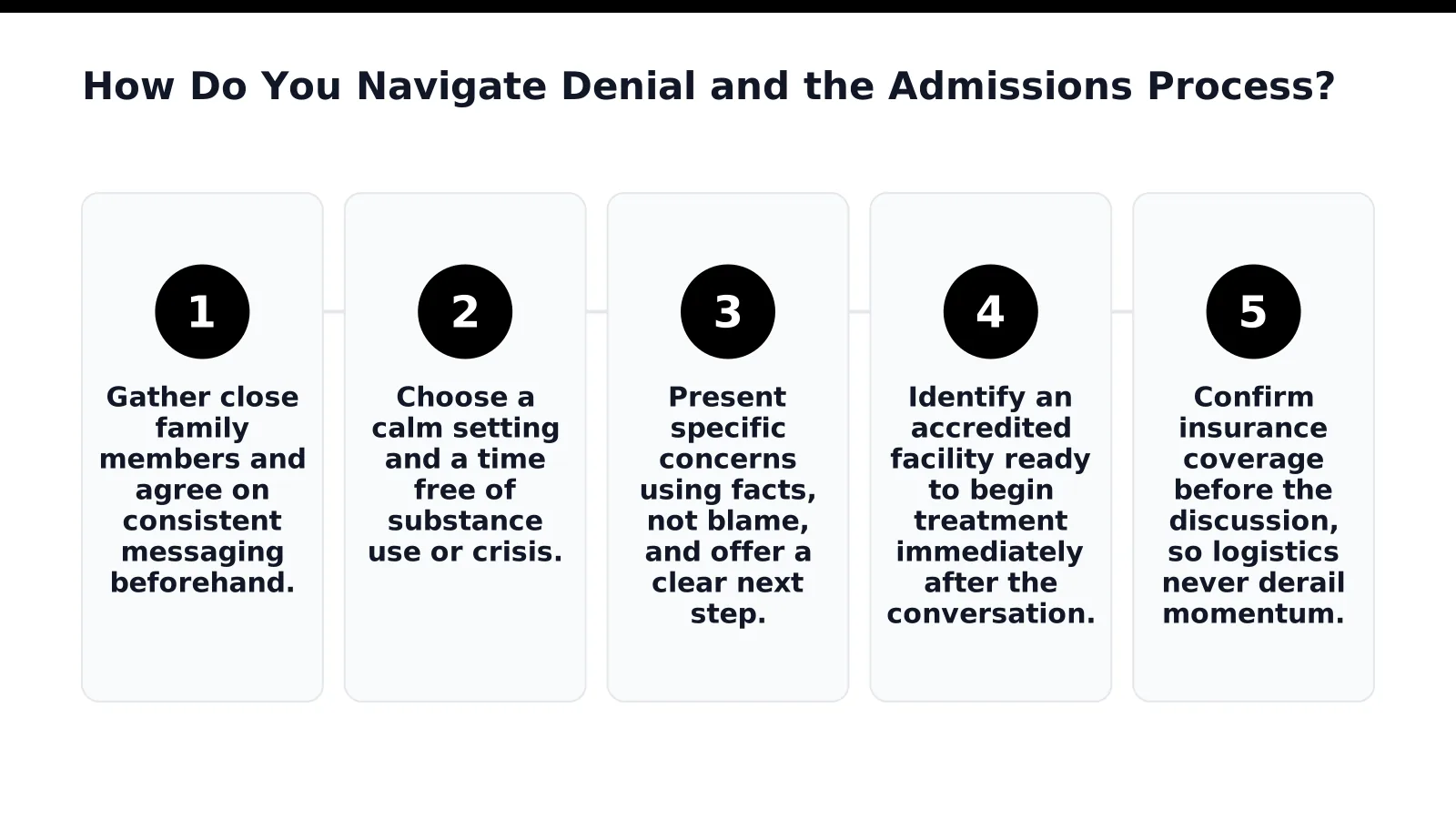
How Do You Navigate Denial and the Admissions Process?

Denial loses its grip once families replace confrontation with a structured plan and a clear admissions pathway. Addiction clouds a person’s ability to recognize the damage being done, so loved ones often carry the burden of initiating change. Waiting for a moment of clarity costs time, health, and sometimes safety, since untreated substance use disorders rarely improve on their own.

Families researching how to help someone get into rehab benefit from breaking the process into manageable stages rather than treating it as one overwhelming conversation. A family intervention works best when it follows a sequence, not a single emotional outburst.

  1. Gather close family members and agree on consistent messaging beforehand.
  2. Choose a calm setting and a time free of substance use or crisis.
  3. Present specific concerns using facts, not blame, and offer a clear next step.
  4. Identify an accredited facility ready to begin treatment immediately after the conversation.
  5. Confirm insurance coverage before the discussion, so logistics never derail momentum.

What If the Person Refuses Treatment?

Refusal does not end the options available to a family. Many states have enacted statutes permitting involuntary detention and treatment for individuals with addiction who cannot or will not consent voluntarily. Legal criteria vary, so families should consult local resources to understand what qualifies before pursuing this route.

Does Insurance Cover Admission?

Coverage often removes the biggest obstacle families face. Purpose Healing Center accepts nearly all AHCCCS insurance plans along with many private health insurance plans in-network, extending accessible support across Arizona. Cost should not stand between a family and treatment, since most major insurance plans are accepted.

Once admission begins, medical detox manages withdrawal symptoms as the first clinical step toward stabilization. The Joint Commission-accredited facilities in Scottsdale and Phoenix provide a structured, safe environment, giving families seeking help for family of addict confidence that admission leads directly into coordinated clinical care.

What Common Mistakes Should Families Avoid in Recovery?

Families most often undermine recovery efforts through angry ultimatums, prolonged secrecy about the problem, and waiting for a “rock bottom” moment that may never come. Loved ones cannot force someone to want recovery. Calm, clear, compassionate guidance moves a struggling family member toward treatment far more effectively than confrontation does. Avoiding these missteps protects the relationship and raises the odds of a successful treatment outcome.

Common errors include:

  1. Confronting a loved one during a crisis or while substances are still active in their system.
  2. Issuing ultimatums without following through, which erodes trust over time.
  3. Relying on a single, unplanned conversation instead of organizing a structured family intervention with multiple voices and a clear plan.
  4. Overlooking co-occurring mental health symptoms that accompany the substance use disorder.
  5. Pulling back once treatment begins, rather than staying engaged through aftercare.

Should families handle this alone?

Isolation ranks among the costliest mistakes a family can make. Learning how to help someone get into rehab works better with outside support, such as SAMHSA’s National Helpline, a free, confidential, 24/7 referral service families can call when conversations stall.

What happens when families skip aftercare involvement?

Recovery does not end at discharge. Purpose Healing Center structures a full continuum of care, from detox and residential treatment through PHP, IOP, and aftercare support. Families who stay engaged at each phase give their loved one a stronger foundation. This compassionate, holistic approach addresses emotional, physical, and spiritual needs throughout, giving help for family of addict situations real staying power beyond the first weeks of sobriety.

Conclusion

In closing, helping a loved one enter rehab requires patience, structure, and unwavering compassion, not perfection. The path forward begins with a single conversation grounded in respect, continues through coordinated clinical care, and extends far beyond discharge through sustained family involvement. Recovery transforms entire households when families commit to the full continuum of support, addressing the emotional and physical dimensions of addiction together. Your willingness to take these steps demonstrates the profound power of love in healing.

Written and Reviewed by