


What Should You Know Before Starting the Conversation?
Is It the Family's Job to Decide When to Intervene?
What Should Happen Before the Conversation Takes Place?
- Gather input from trusted relatives or friends who have observed the behavior.
- Consult a health professional about warning signs and appropriate language.
- Research treatment options in advance, including admissions support.

How Do You Hold a Compassionate Family Intervention?
- Gather close family members and agree on shared concerns before the conversation starts.
- Choose a calm, private setting free of distractions or time pressure.
- Speak from personal observation ("I noticed") rather than accusation ("You always").
- Present a specific, ready treatment option so the conversation ends with a concrete next step.
- Stay prepared for resistance, and avoid arguing if the person becomes defensive.
What if the person refuses treatment during the intervention?
Does family involvement continue after admission?
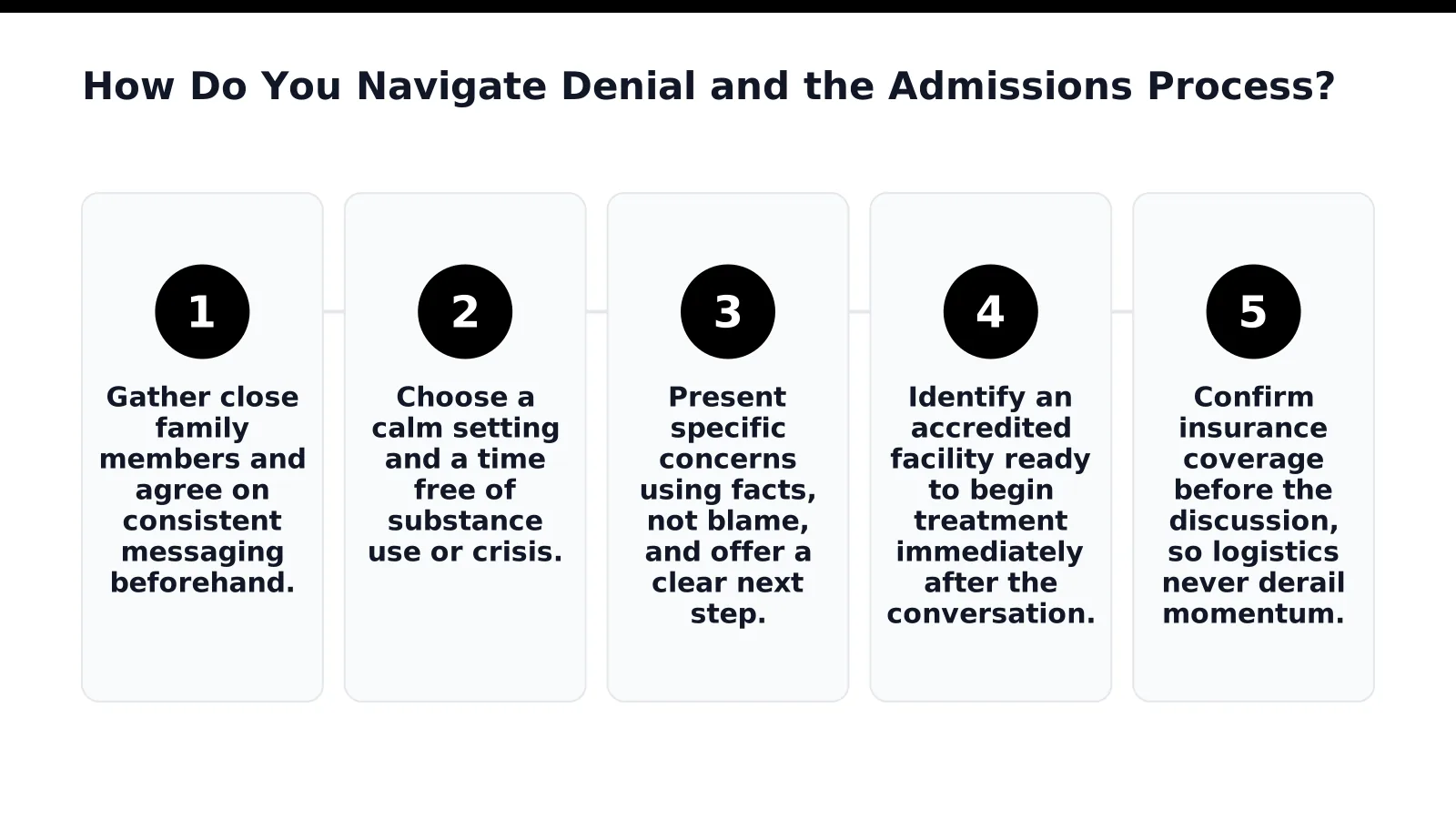
How Do You Navigate Denial and the Admissions Process?
- Gather close family members and agree on consistent messaging beforehand.
- Choose a calm setting and a time free of substance use or crisis.
- Present specific concerns using facts, not blame, and offer a clear next step.
- Identify an accredited facility ready to begin treatment immediately after the conversation.
- Confirm insurance coverage before the discussion, so logistics never derail momentum.
What If the Person Refuses Treatment?
Does Insurance Cover Admission?
What Common Mistakes Should Families Avoid in Recovery?
- Confronting a loved one during a crisis or while substances are still active in their system.
- Issuing ultimatums without following through, which erodes trust over time.
- Relying on a single, unplanned conversation instead of organizing a structured family intervention with multiple voices and a clear plan.
- Overlooking co-occurring mental health symptoms that accompany the substance use disorder.
- Pulling back once treatment begins, rather than staying engaged through aftercare.
Should families handle this alone?
What happens when families skip aftercare involvement?
Conclusion
Written and Reviewed by
Last Modified: November 19, 2026


 480-579-3319